
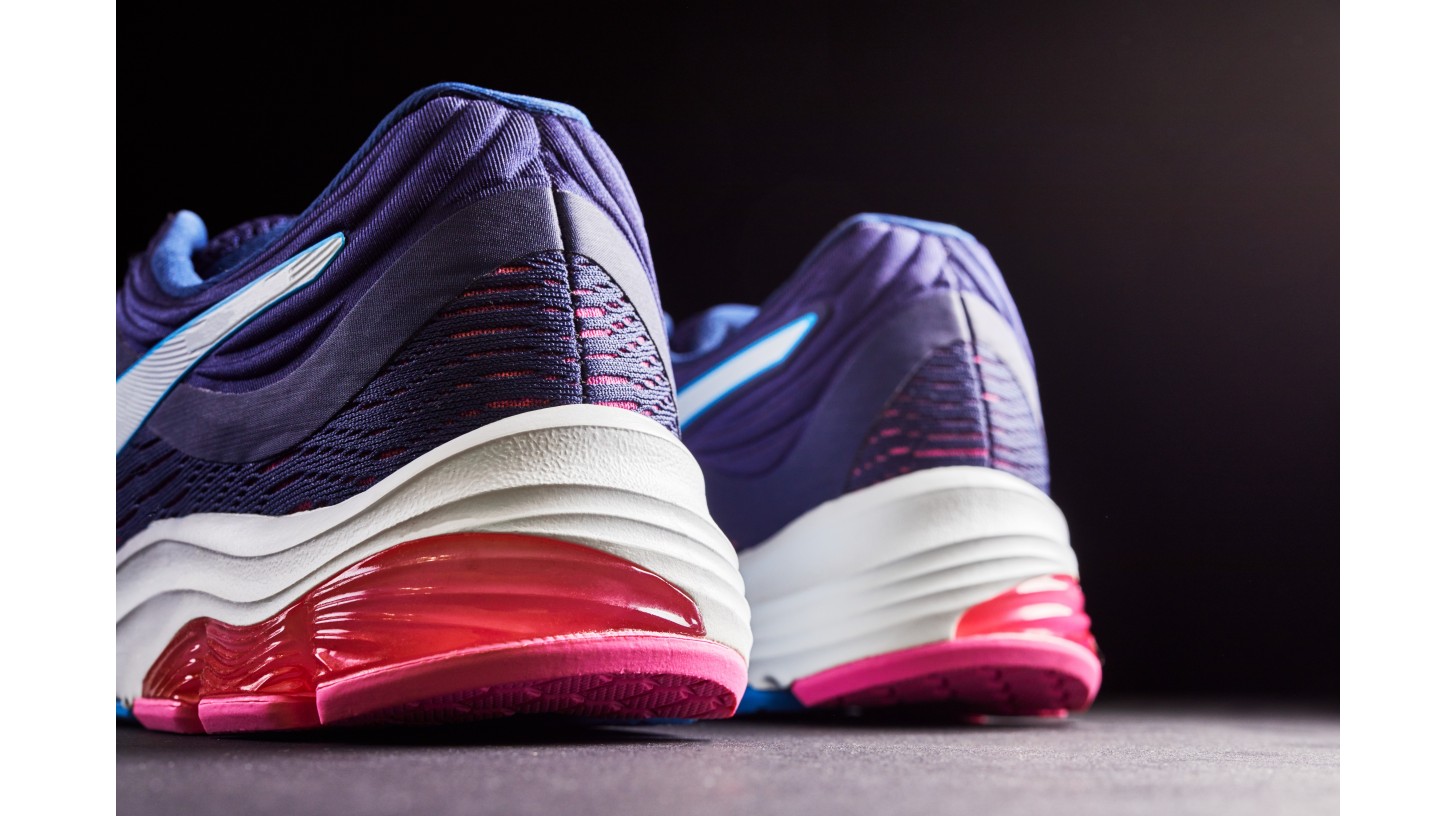
When Should You Choose Shoes with Reinforced Cushioning?
Regular running places repeated stress on the joints, tendons, and muscles. With each stride, the foot makes contact with the ground while absorbing a force that can represent several times the runner’s body weight, especially on hard surfaces such as roads. This impact directly affects comfort, stability, posture, and post-workout recovery. When these shocks are repeated hundreds or even thousands of times during a single session, their cumulative effect becomes a key factor in preventing discomfort and injury.
Understanding the role of the midsole therefore makes it possible to adapt your shoes to your specific needs. This central component acts as a mechanical filter between the ground and the foot, regulating absorption, responsiveness, and support. Whether you primarily run on roads, in urban settings, or on trail paths, cushioning needs can vary significantly. Shoes with reinforced cushioning represent a practical solution for runners seeking protection, stability, and durability, particularly in Quebec and Ontario, where climate variations and surface types can increase mechanical stress.
Key Points
- Shoes equipped with reinforced cushioning promote a significant reduction in impact with every run.
- The foam midsole determines the quality of shock absorption.
- The best cushioning depends on training volume and terrain.
- Maximum cushioning is well suited to long distances on roads.
- The cushioning rating helps objectively compare each shoe.
- Moderate cushioning may be sufficient for lighter use.
- The choice varies depending on whether the runner is a woman, a man, or a child.
Why Shoes with Reinforced Cushioning Provide a Significant Reduction in Impact
In running, ground impact can represent two to three times body weight. On roads, which are firm and uniform surfaces, this mechanical stress is intensified. Shoes equipped with reinforced cushioning are designed to absorb part of this energy through technical foam integrated into the midsole.
The goal is to ensure a significant reduction in impact in order to limit transmission to the ankles, knees, and hips. A well-designed shoe acts as a mechanical filter. The foam compresses upon impact and then regains its shape to support propulsion during the stride.
Substantial cushioning becomes particularly relevant as training frequency increases. The higher the weekly mileage, the more comfort may be affected by repetitive impact. In this context, additional cushioning can support stability and reduce muscular fatigue.
Certain technologies developed by ASICS illustrate this balance between absorption and control. The objective is not only to provide maximum cushioning, but also to maintain a smooth transition from heel to forefoot.
How the Midsole Influences the Best Cushioning in Running Shoes
The midsole is the functional core of a running shoe. Positioned between the outsole and the internal structure, it determines the sensation experienced during movement.
Soft foam promotes maximum cushioning and a more enveloping feel. Denser foam provides good cushioning while improving lateral stability. The best cushioning therefore represents a balance between shock absorption and support.
To compare models, it is useful to review the cushioning rating provided by the manufacturer. This information helps determine which level of cushioning to choose based on distance and usage. The term “universal cushioning” is sometimes used to describe versatile shoes suitable for various runner profiles.
Modern foam innovations now make it possible to achieve additional cushioning while maintaining lightness and responsiveness. Some structures even offer energy return, optimizing stride efficiency without compromising protection.
When to Choose Shoes with Maximum Cushioning for Road Running
Road running involves constant contact with rigid surfaces. Over long distances, this repeated impact can affect overall comfort. In this context, maximum cushioning becomes particularly relevant.
The following situations often justify this choice:
- Frequent training on asphalt.
- Preparation for a long-distance race.
- High weekly mileage.
- Increased sensitivity to impact.
- A pronounced heel strike.
Body weight also plays an important role. A heavier individual places greater pressure on the shoe’s foam. A more generous midsole can help prevent premature compression of the material.
For both men and women, the need for protection remains similar when facing the hardness of asphalt in Ontario.
How to Adapt Cushioning Based on Terrain, from Trail to Road
Terrain directly influences the recommended level of shock absorption and cushioning. On trails, uneven, rocky, sandy, or muddy surfaces create constant changes in footing. This natural instability requires a balance between stability, protection, and ground precision. Trail shoes often incorporate slightly firmer foam in the midsole to ensure lateral support while maintaining sufficient absorption, particularly during downhill sections.
On roads, the priority remains significant impact reduction, as asphalt provides a uniform but rigid surface. Softer foam can improve comfort during continuous efforts, especially on long runs. This type of cushioning promotes a smoother transition from heel strike to toe-off, helping reduce fatigue over time.
Body morphology is also a determining factor when selecting a shoe. A woman may require a different fit than a man due to foot width, volume, and weight distribution. A shoe designed for a child must include cushioning adapted to growth and bone flexibility. Body weight and posture also influence how the foam compresses and how cushioning is perceived.
Urban running and trail running stress the foot structure and muscle chains differently. Adapting cushioning to actual usage, frequency, and terrain helps optimize long-term comfort, stability, and shoe durability.
What Criteria Should Be Analyzed When Choosing Shoes with Suitable Cushioning
Choosing the right shoe requires an objective evaluation of several elements: running frequency, average distance per session, surface type, and the level of comfort and stability desired. It is also relevant to consider body weight, posture, and running technique, as these factors directly influence how the midsole compresses upon impact. A thoughtful assessment helps ensure the selected model matches real usage rather than relying solely on appearance or popularity.
Substantial cushioning can be beneficial when gradually increasing training volume. As weekly workload grows, joints and muscles are subjected to greater stress. Adequate shock absorption supports the transition to longer distances and helps limit repetitive micro-trauma associated with running on hard surfaces. This protection becomes especially relevant for individuals training multiple times per week.
ASICS models available at Chaussures Le Pacha incorporate advanced research on foam density, responsiveness, and midsole durability. The objective is to provide a balance between absorption, stability, and material longevity so that the shoe retains its properties over time. Running should never come at the expense of joint health, particularly when practiced consistently.
Good cushioning acts as long-term support for the knees, hips, and lower back, especially for regular runners in Quebec, where urban surfaces can intensify impact. Investing in a shoe suited to one’s profile and training volume promotes a more comfortable and sustainable practice.
Comparison of Cushioning Levels in Running Shoes
This comparison shows that the best cushioning depends on context. A short run on mixed terrain does not necessarily require maximum cushioning, whereas a road marathon may.
Conclusion
Choosing shoes equipped with reinforced cushioning is a wise decision for anyone who runs regularly. As sessions accumulate week after week, repeated impact places significant stress on joints and soft tissues. With a high-performance foam midsole, these models promote a significant reduction in impact while improving overall comfort and stride stability. Effective shock absorption not only reduces immediate impact sensation but also supports recovery between workouts.
The best cushioning depends on training volume, terrain, and runner profile. Someone training mainly on roads over long distances will not have the same needs as a runner focusing on shorter or trail outings. Maximum cushioning is particularly suitable for long distances and hard surfaces, while moderate cushioning may be sufficient for lighter or occasional use. The balance between softness and stability remains central when evaluating a shoe.
By carefully assessing each criterion, including training frequency, surface type, and desired sensation, and by determining the appropriate level of cushioning based on real needs, it becomes possible to select a shoe that aligns with one’s practice. This thoughtful approach promotes lasting comfort and helps preserve joint health season after season, whether training in Quebec or Ontario.